
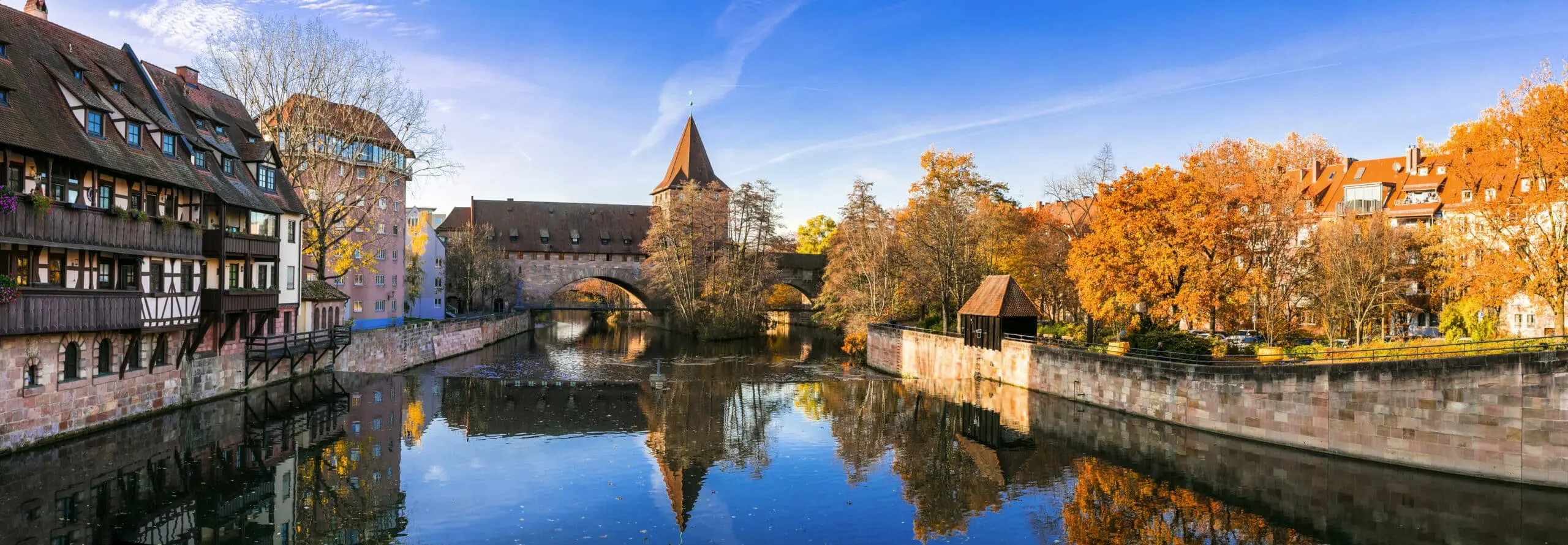
Selling property in Nuremberg: When the price negotiation really begins
10. Februar 2025 · 6 min read
Many owners think: „Negotiations only start when an offer is on the table.“ In practice, when selling property in Nuremberg, price negotiations start much earlier - often before a buyer even calls. The reason is simple: buyers negotiate in their heads first. They read the advertisement, they scan the photos, they notice whether any documents are missing, they listen to signals such as „VB“ or „Available immediately“ - and they already set their target price internally.
In this article, I show how price negotiation in Nuremberg 2025 actually comes about, what mistakes owners unconsciously send as an „invitation to press“ and how I, as a real estate agent in Nuremberg, set up the process so that the price doesn’t soften before the first viewing.
Why buyers are negotiating earlier in 2025 than in the past
Three factors are driving this:
Total costs are in focus, buyers calculate early.
Financing is stricter, banks set limits.
There are alternatives in many districts, buyers compare quickly.
That’s why price anchors are not formed in conversation, but in impression.
Market value: The first price anchor is your best defense
The market value is the price that can realistically be achieved under normal market conditions. A price that is clearly derived appears stable. A price that is „felt“ seems negotiable.
I derive the market value from:
Standard land value as location orientation
Market analysis in the district
Reference properties with real sales prices
Material value method for houses
Income capitalization approach for rented properties
If this basis is correct, the price is not „a number“ but a position.
Standard land value: Buyers check whether your price seems logical
Buyers do not use the standard land value as a calculation formula, but as a plausibility check. If the price seems conspicuously high or conspicuously low, the internal negotiation starts.
Strikingly high leads to: „It has to come down.“
Conspicuously low leads to: „There’s something wrong or there’s room for more.“
Neither is good.

Christoffer Davis
Real Estate Agent (IHK) · Certified Property Valuer (IHK)
Negotiation is where the real money is made – or lost. I represent your interests with expertise and composure.
Your Negotiation Expert →
Market analysis: The actual negotiation is often the comparison with alternatives
A market analysis shows that buyers rarely make decisions in isolation. They decide relatively.
They compare:
Price per total cost package
Condition and years of modernization
Document situation
Micro-location and quality of living
Risk and plannability
If your offer appears weak in this comparative logic, the negotiation has practically already started.
Reference objects: If you don’t provide suitable references, you leave the story to the buyer
If sellers don’t have any plausible reference properties in mind, the buyer fills the gap with their own comparisons - often with advertisements, not real sales. Negotiations then take place without the seller even having a say.
The most common signals that buyers read as an „invitation to negotiate“
1. Unclear or missing documents
If there are no WEG facts for apartments or modernization certificates for houses, the buyer thinks: „Risk, so discount.“
2. Contradictions in the advertisement
Living space does not match the floor plan, year of construction is unclear, condition is glossed over - this leads to mistrust. Distrust leads to a price reduction.
3. Too many viewings without offers
Buyers look at how „fresh“ a property looks. If they hear or sense that many have already been there, they think: „Then it’s probably too expensive or there’s a catch.“
4. „VB“ or soft formulations without price logic
It is not the abbreviation that is the problem, but the signal effect: „The seller is unsure.“ Uncertainty invites negotiation.
5. Defects without classification
Small defects look like major risks if they are not properly classified. Then „to be on the safe side“ is pressed.
Asset value method and income capitalization method: Why the right logic calms the negotiation
Material value method: helps to explain the substance, condition and investment requirements of houses objectively.
Income capitalization approach: helps to justify the price of rented properties in terms of income and costs.
Both methods are not designed to impress buyers, but to make the price logic comprehensible. Comprehensibility reduces attempts to push the price down.
Incidental purchase costs: the biggest secret negotiating driver
Incidental purchase costs such as land transfer tax, notary and land registry costs are a burden on any budget. Many buyers only get into the „yes, feasible“ range if they make some adjustments to the purchase price. That’s why the negotiation starts early: they want to squeeze the property into their budget.
A seller who understands this budget reality will set the price from the outset in such a way that it remains affordable and still negotiable.
Did you know: Buyers often test the seller’s reaction before the first appointment
Some prospective buyers deliberately ask small questions or „trial price questions“ to see if the seller gets nervous. If you then appear unsure, you will lose price stability before you have even viewed the property.
Step-by-step: How to prevent the negotiation from starting before the meeting
- set a clear price basis: Market value instead of asking price.
- complete the documentation: for apartments, WEG, for houses, modernization and energy.
- position the property clearly: Target group, strengths, honest classification.
- use market analysis: Know and classify alternatives in the neighborhood.
- have reference properties ready: real sales as reality.
- structure viewings: fewer tourists, more suitable buyers.
- check offers for affordability: including ancillary purchase costs so that it doesn’t fall through later.
Conclusion: Price negotiation in Nuremberg 2025 is a process - not a moment
When selling property in Nuremberg, the price negotiation does not start with the offer, but with the first impression. If you use the market value, standard land value, market analysis and reference properties properly, provide documents early on and set the right signals, you will prevent the price from becoming soft even before the meeting.
If you want to sell your property in Nuremberg and want a process in which the price is stable right from the start, I will support you as a real estate agent in Nuremberg with a well-founded valuation and marketing that does not invite negotiation, but reliable offers.
Read more: Selling property in Nuremberg (immobilie) – Nuremberg: (5) | Why buyers decide differently for old apartments in Nuremberg than for new bu…
Planning to sell in the region? Our central guide page on Sell a house in Nuremberg bundles the entire Davis & Partner strategy.