
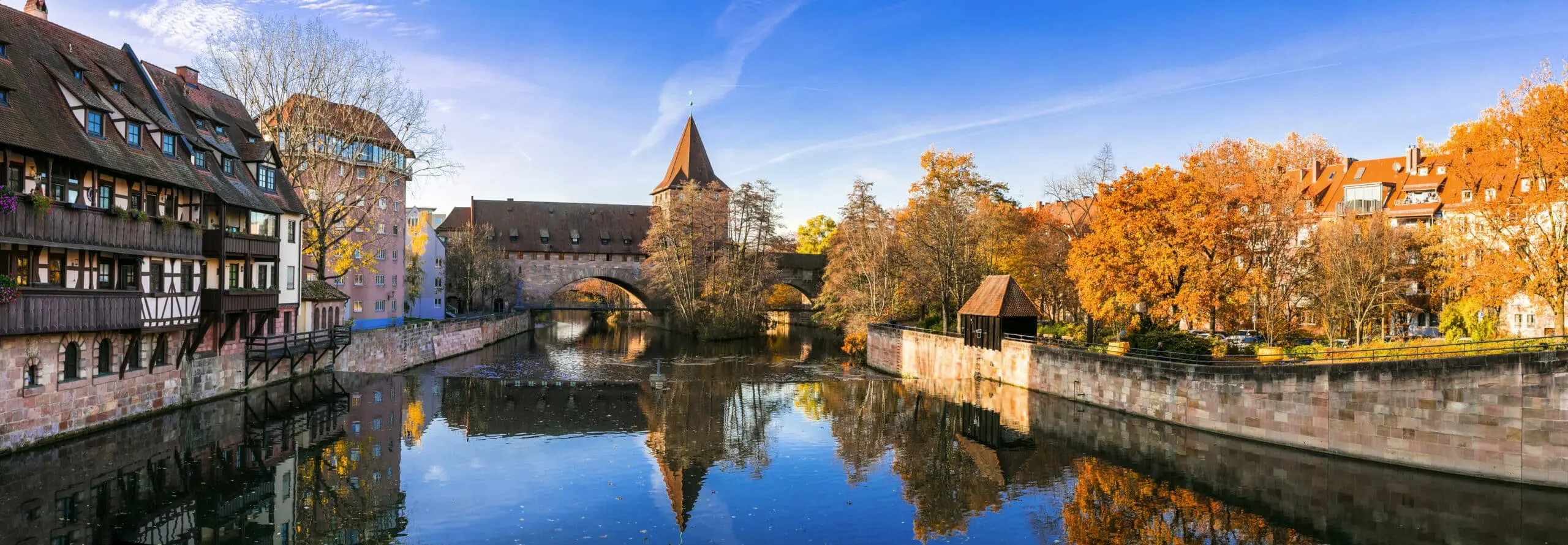
Why first impressions count
By Christoffer Davis · 19. Oktober 2024 · 7 min read
Many owners believe that prospective buyers only get a real impression of a property after a viewing. But from my daily work in Nuremberg, I know that the first impression is formed long beforehand - when you look at the advertisement, the brochure, the first photos or even when you drive past the house.
And this first impression often decides whether a prospective buyer requests an appointment at all or clicks on. Presentation is not a „nice-to-have“, but a strategic means of making the market value visible and attracting serious buyers.
In this article, I will show you why the first impression is so important, what owners often underestimate and how I present properties in such a way that they reach exactly the right target group.
Why first impressions have so much impact
Today, prospective buyers make decisions faster than ever before. The market is full of offers and potential buyers scan dozens of listings every day. They decide in seconds:
- Does the property look well-kept or neglected?
- Does it look light or dark?
- Does it look structured or chaotic?
- Does it look high quality or more in need of renovation than necessary?
- Does it look inviting or rather strange?
This first impression then influences every subsequent decision - from the viewing appointment to the price negotiation.
A good presentation does not mean exaggerated styling, but highlighting the strengths and making the actual potential visible.
Where the first impression really begins
Many owners believe that the presentation only begins with the photographer or the exposé. In reality, it starts much earlier.
The documents: the „invisible first impression“
Before a buyer sees the property, the estate agent or bank often sees the documents first. If there is chaos here, it looks unprofessional.
These include, among other things: Land register extract, energy certificate, living space calculation, plans, proof of modernization.

Christoffer Davis
Real Estate Agent (IHK) · Certified Property Valuer (IHK)
The difference between a good and a great sale is strategy. Let me show you how to position your property.
Your Estate Agent for Nuremberg →
The external effect: the first real contact
Prospective buyers often drive past the house before making an inquiry. If the entrance area looks unkempt, the garden is messy or the windows are dirty, this immediately paints the picture: „Little has been done.“
The exposé: the invitation to make a decision
High-quality photos, clear texts, a realistic description - all of these factors determine whether a prospective buyer feels attracted.
What owners often underestimate in the presentation
Many owners see their property every day and automatically ignore small weaknesses. Buyers do not do this. They see:
- Clutter, even if it is „only there for a short time“
- too much furniture that makes rooms look smaller
- personal items that detract from the property
- dark corners that could actually be bright
- small repairs that send the wrong signals
It’s not about creating perfection, but a neat impression that conveys confidence.
How I present real estate - the process behind it
A professional presentation is not a coincidence, but a sequence of clear steps. For me, it always starts with analysis, not photos.
1. Identify the strengths of the property
I take a close look: Where is the focus? What makes the property special? Where is there potential that needs to be made visible?
2. Prepare rooms for photos and viewings
This is not about elaborate „home staging“, but about clear optimizations: less furniture, more light, tidy surfaces, clear lines.
Typical measures:
- Move large furniture back slightly to open up rooms
- Reduce personal photos so that prospective buyers can imagine living there
- Optimize light sources, open curtains
- Carry out small repairs that would otherwise attract negative attention
3. Plan professional photography
Good photos are not a luxury, but a must if a property is to show its potential. I make sure that photos:
- look bright, clear and realistic
- show rooms large, but not distorted
- showcase the most important highlights
- avoid corners that would look different in reality
4. Formulate clear, honest texts
Texts should inform, not hide. I formulate descriptions in such a way that interested parties get a realistic but attractive picture.
5. Present in a target group-oriented way
Families, couples, investors - each group pays attention to different things. The presentation should suit the right prospective buyers, not all possible ones.
Why the presentation influences the price
A good presentation leads to more qualified inquiries. More qualified inquiries mean more genuine prospects. And that leads directly to better negotiations.
A well-groomed impression reduces typical buyer thoughts such as:
- „There would be a lot to do.“
- „That seems complicated.“
- „The asking price is definitely too high.“
When a property is presented professionally, it automatically sends a signal:
- Order
- care
- intrinsic value
- respectability
And this is precisely what increases the willingness to pay a reasonable price.
How presentation and valuation are linked
A sound valuation is based on:
- Market value
- Standard land value
- market analysis
- Material value method
- Income capitalization approach
- Reference properties
But even if these values are correct, the price achieved is influenced by the presentation.
A realistic valuation plus a high-quality presentation leads to an optimum result - and an optimum price is always achieved when the two go together.
Regional specialty: Why presentation is particularly important in Nuremberg
There are many submarkets in Nuremberg - Gostenhof, St. Johannis, Langwasser, Südstadt, the surrounding area.
Each location has its own dynamic. Buyers often pay very close attention to details because the market is not homogeneous.
For example:
In locations with older existing buildings, maintenance is immediately noticeable. In sought-after districts, many buyers compete for family homes - here, first impressions make the difference extremely quickly.
In the surrounding area, buyers pay more attention to outdoor areas, garden conditions and usable space.
A good presentation shows: The property is well-maintained, of good value and ready for the next step.
Checklist: How to make a strong first impression
- Does the entrance area look neat and inviting?
- Is the property tidy and clearly structured?
- Are personal items kept to a minimum?
- Do rooms appear bright and well proportioned?
- Have small repairs been carried out?
- Are photos professional and realistic?
- Are texts clear, honest and understandable?
If most of these points are met, there is little to stand in the way of a good first impression.
Conclusion: Presentation is not a detail - it is a success factor
The first impression is crucial:
- whether interested parties click on your advertisement
- whether they request a viewing appointment
- whether they connect emotionally with the property
- whether they are prepared to pay the price
- whether the sales process will be stress-free or stressful
A good presentation is not manipulation, but respect for the value of your property and the time of prospective buyers.
As a real estate agent in Nuremberg, this is exactly where I see my role:
To show the property as it really is - in its best form, clearly, honestly and professionally. This creates interest, trust and the framework for a successful sale.
Read more: Selling property privately in Nuremberg: risks and typical mistakes (immobilie) – warum-der- | Real estate sales in Nuremberg: How owners deal with uncertainty with confidence (immobilienverkauf)
Planning to sell in the region? Our central guide page on Sell a house in Nuremberg bundles the entire Davis & Partner strategy.