
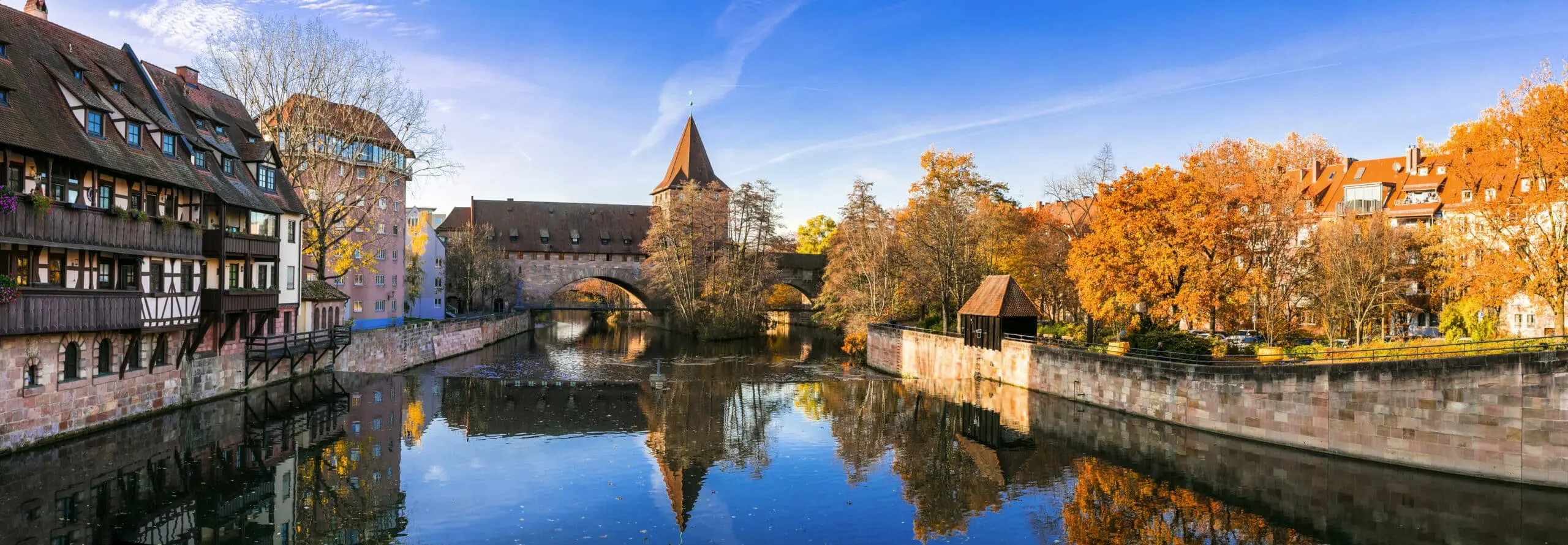
Why I became a real estate agent in Nuremberg - and why trust is my most important asset
16. Oktober 2024 · 11 min read
Imagine you are selling your apartment in Nuremberg - and have the feeling that you are being persuaded rather than really advised. Many owners tell me exactly that before we work together.
The sale of a property involves large sums of money, often part of a retirement provision or an inheritance. The key question is therefore not just: „What is my property worth?“, but above all: „Who can I trust with this decision without feeling bad about it later?“
In this article, I explain why I became a real estate agent, how I work and why trust is my most important asset.
My path to becoming a real estate agent in Nuremberg
I have my roots in Nuremberg and realized early on how strongly real estate shapes people’s lives: the parental home that becomes a change of chapter, the inherited apartment that affects several family members or the apartment building as a building block for retirement provision.
Before I became a real estate agent, I worked in sales for many years. This time gave me two important insights:
- numbers are important - but decisions are always made by people.
- trust is not created through promises, but through comprehensible actions.
When I switched to the real estate industry, it was clear to me that I didn’t want to be the broker who sells quickly and then disappears again, but someone who stands for clarity, structure and reliability in Nuremberg and the region in the long term.
Today, I support owners in Nuremberg, Fürth, Erlangen, Schwabach, Neumarkt and the surrounding area - with the aim of turning complex decisions into clear, comprehensible steps.
What owners really expect from a real estate agent
In initial discussions, I often hear phrases like:
- „I finally want an honest appraisal and no sugarcoating.“
- „I need someone who can explain everything to me clearly - without technical jargon.“
- „I want to feel advised, not put under pressure.“
From my point of view, what owners want above all is
- a realistic, comprehensible property valuation
- a well-founded market analysis instead of rough estimates
- clear, comprehensible communication
- a structured, transparent sales process
- someone who also speaks unpleasant truths
- a partner who truly represents the interests of the owner
This is where trust begins. Without trust, every recommendation is quickly perceived as a sales argument. With trust, it becomes a joint, objective decision.
Trust as the basis for every real estate decision
Trust is not a feeling that just happens. It manifests itself in the decisive moments of the sales process.

Christoffer Davis
Real Estate Agent (IHK) · Certified Property Valuer (IHK)
Selling without a plan costs money. I bring market knowledge, negotiation skills and a proven process.
Get Professional Support →
Three typical situations in which trust is crucial
1 The valuation of the property: When I explain the market value to you - the price your property is likely to fetch under normal market conditions - you need to be sure that this value has not been artificially inflated just to get a contract. It’s about a professionally sound valuation, not wishful thinking. 2 The evaluation of purchase offers: Sometimes the highest offer appears to be the most attractive at first glance. However, the decisive factors are whether the financing is secured, whether the timing fits in with the owner’s life and whether conditions are imposed that could cause problems later on. Trust here means being able to follow my assessment when I say that a slightly lower but solidly financed offer may be the better choice in the long term. 3 Emotional sales decisions: Emotions play a major role in the sale of a family home, as part of an inheritance or after a separation. It’s not just about the price, but also about fairness, respect and a calm process. In such situations, trust in the person accompanying you is at least as important as professional competence.
Technical terms explained clearly - for more security
Many owners are familiar with technical terms such as market value, standard land value or income capitalization approach from the Internet, but feel unsure about them. That’s why I attach great importance to explaining these terms clearly and putting them into context.
Market value
The market value is the price that could be achieved in normal business transactions under normal market conditions. It takes into account, among other things
- Location of the property
- Size and layout
- Year of construction and condition
- fixtures and fittings
- Current market situation and demand
The market value is the basis for any serious purchase price determination.
Standard land value
The standard land value indicates the average value of a square meter of land in a particular location. In Nuremberg, for example, these values differ significantly between Gostenhof, St. Johannis, Langwasser, Südstadt and the surrounding area.
The standard land value helps to understand:
- how strongly the location influences the value
- what proportion of the total value is in the property
Income capitalization approach
The income capitalization approach is mainly used for rented properties such as apartment buildings or rented condominiums. The focus is on a buyer’s future income and expected return. Important factors are
- current and potential rental income
- ongoing costs, for example maintenance and administration
- long-term development of rents
This data is used to derive a value that is decisive for investors.
Material value method
In the asset value method, the substance of the property plays the main role. The following is considered here:
- what it would cost to construct the building
- how much the building has depreciated in value due to age and wear and tear
- how high the land value is
This procedure is particularly important for owner-occupied single-family homes, semi-detached houses or detached houses where the return on investment is not the main focus.
Speculation tax
Speculation tax may apply if a property is resold within a certain period of time after purchase. I draw attention to this issue in discussions in order to raise awareness. At the same time, it is clear that tax advisors or lawyers are responsible for providing binding information - I am not a substitute for tax or legal advice.
Incidental purchase costs
Incidental purchase costs typically include
- Real estate transfer tax
- notary fees
- Fees for entry in the land register
- possibly a broker’s fee
These costs can quickly reach 8 to 12 percent of the purchase price. Buyers factor these additional costs into their calculations, which ultimately also influences their willingness to pay. It is important for owners to understand this in order to be able to classify offers correctly.
Market analysis and reference properties - decisions based on data
A good market analysis is not based on gut feeling, but on facts and figures. Among other things, I work with:
- Current sales cases of comparable reference properties
- Differences in location, condition, year of construction and fittings
- Supply and demand in the respective district
- Typical marketing periods in this market segment
An example from my practice: An owner in Nuremberg-Gostenhof was convinced that he could sell his apartment at a significantly higher price because an acquaintance had achieved a very high price. On closer inspection, however, it turned out: different floor, different condition, different demand at the time of sale. Only a comparison with suitable reference properties and a thorough market analysis led to a realistic, well-founded price.
In this way, uncertainty gradually turns into clarity - and that is the basis for good decisions.
The sales process - clearly structured instead of chaotic
Many owners only really feel comfortable when they know exactly what to expect. That’s why I work with a clear, transparent process.
Step-by-step to selling your property in Nuremberg
1st Meeting and clarification of objectives: We talk about your situation, your objectives, your time frame and possible alternatives. 2nd Document check: Review of existing documents such as land register excerpt, energy certificate, plans, building description and other documents. 3 Property valuation: Determination of a realistic value on the basis of market value, standard land value, income capitalization approach and/or asset value approach as well as a market analysis. 4 Sales strategy: Determination of the target group, the pricing strategy and the form of marketing - for example, open or discreet. 5 Preparation of marketing: Preparation of floor plans, creation of a structured property description, selection of meaningful photos and, if appropriate, minor optimizations before the start of sales. 6 Marketing and viewings: Coordination of inquiries, pre-qualification of interested parties and carrying out individual viewings instead of anonymous mass viewings. 7. checking and negotiating offers: checking creditworthiness, assessing financing, weighing up price, flexibility and security. 8 Preparation of the notary appointment: Discussion of the draft contract, clarification of open questions and accompaniment to the appointment. 9. handover and aftercare: Preparation of a handover report, recording of meter readings and support if any questions arise after the sale.
Checklist: Is this estate agent right for me?
You can ask yourself these questions at every real estate agent meeting:
- Are the market value, standard land value, income capitalization approach and asset value approach explained in an understandable way?
- Is the market analysis comprehensible and not just a rough estimate?
- Does the estate agent also talk about risks, for example if the asking price is too high?
- Do I feel advised rather than pressured?
- Do I have the impression that my personal situation is being taken seriously?
- Can I ask questions at any time without having to justify myself?
The more of these questions you answer with „yes“, the better the estate agent is likely to suit you.
Regional characteristics in Nuremberg
The real estate market in Nuremberg consists of many different submarkets. Here are a few examples:
- Gostenhof: popular old buildings, often in need of renovation
- St. Johannis: highly sought-after location, limited supply
- Langwasser: different years of construction, wide price range
- Südstadt: mixture of old buildings, post-war buildings and new buildings
- Surrounding area: own market structures and partly different price levels
Particularly in the case of old buildings, monument protection, energy-efficient renovation and the need for modernization play a central role. Addressing these points openly instead of playing them down is an important part of fair advice.
Reference properties - practice instead of theory
Instead of just explaining in theory how a sale can take place, I use real reference properties from Nuremberg and the region to make processes tangible. Owners are often interested:
- How was a comparable property marketed?
- How long did the sale take?
- What obstacles were encountered - and how were they resolved?
Reference properties help to calibrate expectations and provide a solid basis for decisions.
Why I won’t accept an order without trust
Sometimes it becomes clear during the first meeting that there is a big difference in expectations - for example, when it comes to price or the type of collaboration. In such cases, I address this openly.
I won’t accept an order if there is no foundation of trust. A sales process that starts with a bad feeling is unnecessarily stressful for everyone involved - for the owner, for the buyer and also for me.
I rely on long-term relationships, recommendations and a way of working that suits me. Trust is the most important basis for this.
Conclusion: Trust as the most important asset
I became a real estate agent because I want to help people make one of the most important decisions of their lives - calmly, honestly and in a structured way.
Trust is not a nice extra, but the basis for this:
- sound and realistic pricing
- a clear, comprehensible sales process
- objective decisions, even in emotionally difficult situations
If you own a property in Nuremberg or the region and would like advice on an equal footing, everything starts with an open discussion. Without empty promises, but with a clear attitude: trust is my most important asset - and that’s exactly how I see my work as a real estate agent in Nuremberg.
Read more: Real estate sales in Nuremberg: Why closing the deal makes all the difference (immobilienverkauf) – Nuremberg | Broker commission explained clearly: What you pay for and what you get in return (maklerprovision)
Planning to sell in the region? Our central guide page on Sell a house in Nuremberg bundles the entire Davis & Partner strategy.