
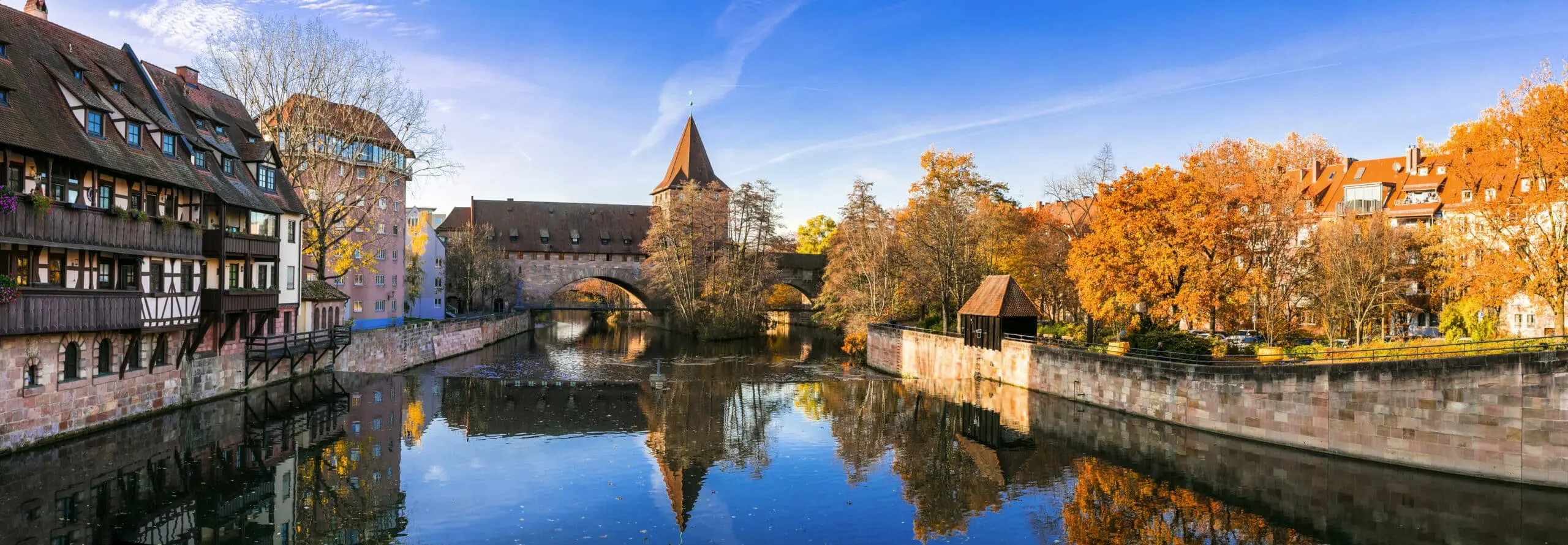
Selling an apartment in Johannis
By Christoffer Davis · 10. November 2024 · 7 min read
„Old building in Johannis, that’s premium.“ Often true - but not automatically. When selling property in Nuremberg, I regularly see that owners in Johannis expect too much from the word „old building“. Buyers love style, high ceilings and floorboards. At the same time, they are making tougher calculations in 2025: condition, building community, energy, running costs. That’s why an apartment in an old building in Johannis can be highly sought-after, but still not achieve the price that owners have in mind if certain factors don’t fit.
In this article, I will show you why old buildings in Johannis are not automatically expensive, which price levers will really count in 2025 and how to accurately derive a realistic market value.
Why Johannis is a top district, but no price guarantee
Johannis is attractive, no question about it. Nevertheless, the market does not pay for the district, but for the combination of location and property quality.
There is a wide range in Johannis because old buildings vary greatly:
unrenovated, partially modernized or completely renovated
in quiet locations or on busy streets
with balcony or without
with a good floor plan or with compromises
solid WEG or problematic WEG
These differences are clearly visible in the price in 2025.
Market value: the only value that really matters
The market value is the price that can realistically be achieved under normal market conditions. It is not the desired price and not the highest advertised price in the neighborhood.
When selling an apartment in Johannis, the market value is decisive because buyers and banks ultimately ask the same question: Is the price comprehensible?
Standard land value: orientation, not final price
Many owners argue: „The standard land value in Johannis is high, so my apartment is automatically expensive.“ The standard land value shows the quality of the location, but it says nothing about whether:
the roof will soon be due
the heating is old
the reserve is too small
the house rent is high
the apartment is dark
the electrics are old
Old buildings are not only charming, they also have substance and future costs.

Christoffer Davis
Real Estate Agent (IHK) · Certified Property Valuer (IHK)
A property sale is a major decision. I make sure you enter the process informed and well-prepared.
Start Your Apartment Sale →
Market analysis: What buyers really expect in Johannis 2025
A market analysis means: How do buyers actually behave?
In Johannis I see 2025:
Refurbished apartments in old buildings work very well if the price and presentation are right.
Unrenovated old buildings also sell, but only with a realistic price and clear communication.
Unclear or embellished information quickly leads to mistrust.
High house prices and low reserves depress demand, even in good locations.
This explains why old buildings are not automatically „expensive“, but are „valued“.
Reference properties: Old buildings are only comparable if the details match
„An apartment in the street was sold for X.“ That sounds convincing, but is rarely a real comparison for old buildings.
Reference properties must match:
Renovation status of the apartment and house
Floor, elevator, balcony
Floor plan, lighting, noise
House money and reserves
Date of sale
Without this fit, any comparison is vulnerable, and buyers take advantage of this in negotiations.
The most common reasons why old buildings in Johannis do not automatically achieve high prices
1. Renovation status: charm is no substitute for technology
Many old buildings are visually beautiful, but technically old. Buyers then do the math:
Heating and pipes
Windows and insulation
Electrics
Bathroom and kitchen
If these issues are unresolved, the price will be depressed or financing will be more difficult.
2. House money and reserves: the underestimated topic
In Johannis, it’s not just the four walls that matter, but also the house. Buyers pay close attention to:
The amount of house money
level of reserves
Minutes and planned measures
A nice old building feeling is of little help if buyers fear that expensive measures will be required in the coming years.
3. Floor plan: Old buildings can be impractical
Old buildings can be beautiful and impractical at the same time:
Walk-through room
Narrow, winding corridors
small kitchen
difficult furnishing
lack of storage space
Buyers think in everyday terms. An impractical floor plan costs money, no matter how high the ceilings are.
4. Light and noise: very decisive in Johannis
Depending on the street and orientation, the quality of living can vary greatly. Buyers check:
Brightness
Window position facing the street or inner courtyard
Noise with closed windows
This has a direct effect on demand and price.
Material value method and income capitalization method: what role do they play in old buildings?
The asset value method helps to classify the substance and structural condition, especially in the case of very substantial properties.
The income capitalization approach is relevant if the property is rented out or if investors are the target group.
In practice, I combine the methods with market analysis and reference properties so that the value does not remain theoretical.
Incidental purchase costs: why buyers’ budgets are limited
Buyers have to pay incidental purchase costs: Land transfer tax, notary and land registry costs. These costs reduce the scope, especially when modernization is necessary.
This means that the price of an unrenovated old building must be such that buyers can afford the incidental purchase costs plus investments. Otherwise the financing will fall through or the buyer will negotiate hard.
Did you know: A starting price that is too high quickly makes an old building „old“
Old buildings thrive on emotion. If an offer is online for a long time, the emotion turns into skepticism:
„Why is it still there?“
„Is there something wrong with the house?“
„There must be a lot wrong with the price.“
A realistic starting price, on the other hand, generates demand and stabilizes negotiations.
Step-by-step: How to realistically value an old apartment in Johannis
- on-site check: floor plan, light, noise, condition, micro-location.
- check documents: Living space, energy certificate, modernizations.
- clarify WEG facts: House money, reserves, minutes, planned measures.
- classify the standard land value: as a location orientation, not as a price formula.
- market analysis: demand and marketing period 2025 in Johannis.
- reference properties: real sales with comparable characteristics.
- choose the appropriate method: Income capitalization approach for rentals, asset value approach as a view of substance.
- derive market value: comprehensible and bankable.
- determine pricing strategy: in line with the market instead of „testing“.
Conclusion: Old buildings in Johannis can be expensive, but they don’t have to be
Old buildings in Johannis are attractive, but in 2025 it’s not the label that counts, but the substance and the ability to plan. If you properly classify the market value, standard land value, market analysis and reference properties and, depending on the property, take into account the asset value method or income value method, you will avoid wishful price traps and sell stably.
If you want to sell your property in Nuremberg and want to know what your old apartment in Johannis is realistically worth, real estate agents in Nuremberg will support you with a well-founded valuation and marketing that is not based on myths, but on results.
Read more: Real estate sales in Nuremberg (immobilienverkauf) – Johannis: | Selling a property in the Nuremberg area (immobilie)
Planning to sell in the region? Our central guide page on Sell a house in Nuremberg bundles the entire Davis & Partner strategy.