

Davis & Partner –
Your owner-managed real estate agent in Nuremberg.
Your expert for the metropolitan region – from Erlangen and Fürth to Roth and Schwabach.
Sale of residential properties and investment assets. Personally guided. Strategically led.
Free. Non-binding. Discreet.
Open Agency Profile
Davis & Partner operates as a specialized boutique estate agency in the Nuremberg region, dedicated to the professional sale of residential and investment properties, including houses, condominiums, land, and multi-family apartment buildings. Under the personal cross-border advocacy of Christoffer Davis (Certified Real Estate Agent & Appraiser IHK), we combine rigorous market valuation to achieve premium asset value, targeted marketing via our affiliated search-client network followed by strategic public placement, and bank-ready document engineering. This ensures a fully protected sales process with uncompromising legal security for premium property owners and international clients.
Davis & Partner supports property owners in Nuremberg and the metropolitan region with clear strategy, expert valuation and professional negotiation.



Christoffer Davis
Real Estate Agent (IHK)
Property Appraiser (IHK)

Non-binding. Personal. Confidential.
Christoffer Davis
Real Estate Agent (IHK) & Real Estate Appraiser (IHK)
As an owner-managed real estate agency, we are the go-to choice for marketing private residential properties, single-family homes, and condominiums in the greater Middle Franconia region. For every standard sales listing, we guarantee maximum, comprehensive market reach through the use of state-of-the-art digital sales channels.
To ensure seamless accessibility and precise property documentation at a law firm’s level of quality, we combine Christoffer Davis’s personal leadership in negotiations and valuations with Immonation GmbH’s established operational processes, exclusive network of clients seeking properties, and digital infrastructure. While traditional real estate brokerage chains often offer only standard processes, our interdisciplinary approach ensures absolute accuracy and maximum transaction security for discerning property owners from the very first minute.
Learn more about The Firm Principle.
Our range of services focuses on the strategic marketing and valuation of:
Traditional Homeownership, Single-Family Homes & Townhouses. Highly efficient sales of private residential properties through a straightforward standard sales process. Through an exclusive partnership with the market leader Immowelt, we guarantee our clients maximum, prioritized marketing exposure and comprehensive reach across the entire mass market. Our standardized, digital transaction management system enables us to process a high volume of transactions throughout the greater Nuremberg area with absolute accuracy and in record time.
Yield-oriented investments & residential buildings. Fact-based transaction support, in which condominiums, apartment buildings, and portfolios are evaluated in a way that meets investors' needs and optimizes returns under current interest rate conditions.
Building lots & development sites. Analyses of development potential under building codes and targeted outreach to property developers and project developers.
Receive a realistic assessment of the current market value of your property in Nuremberg.
What is your property worth?
Request for a law firm-based market value assessment.

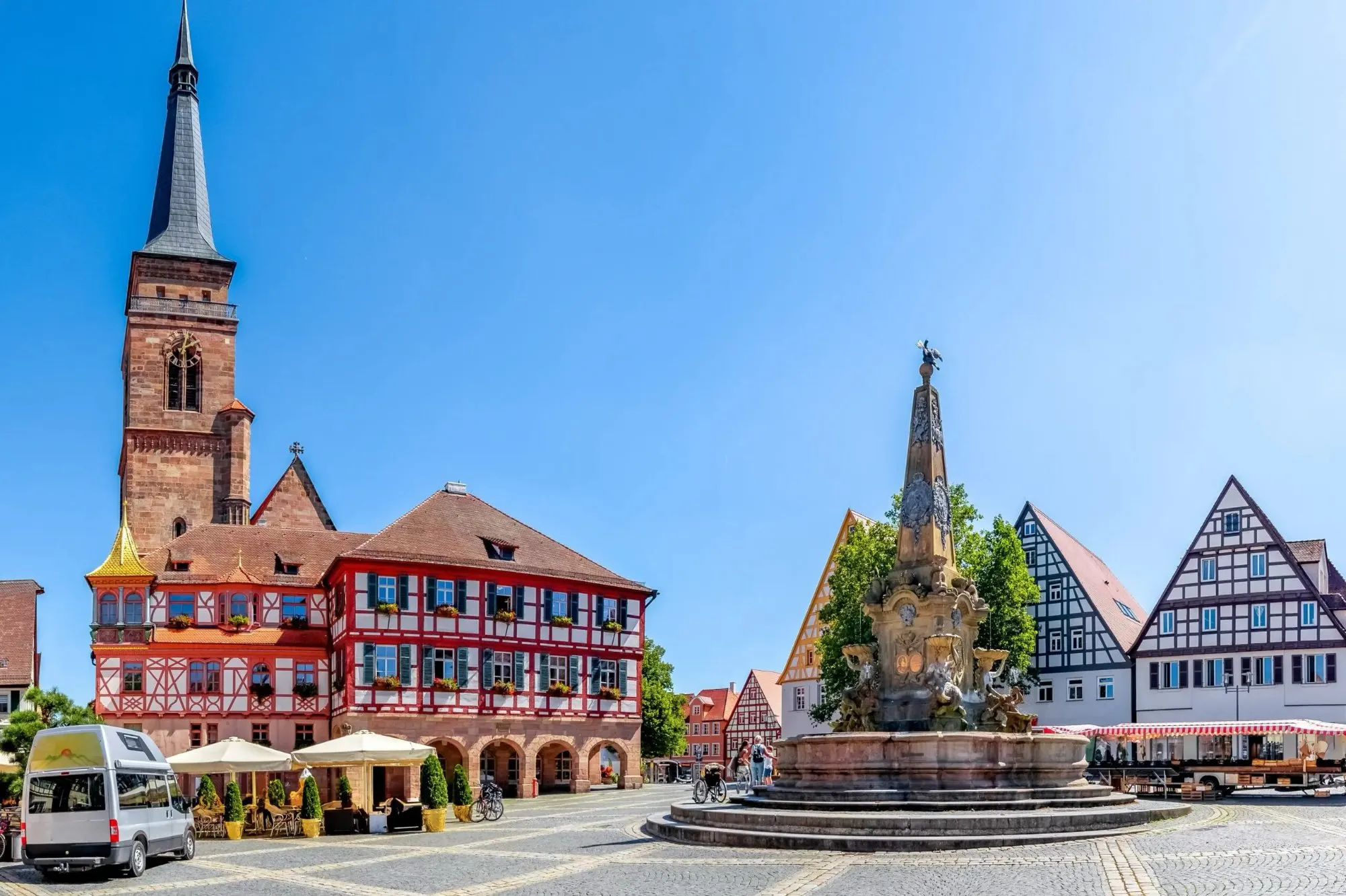
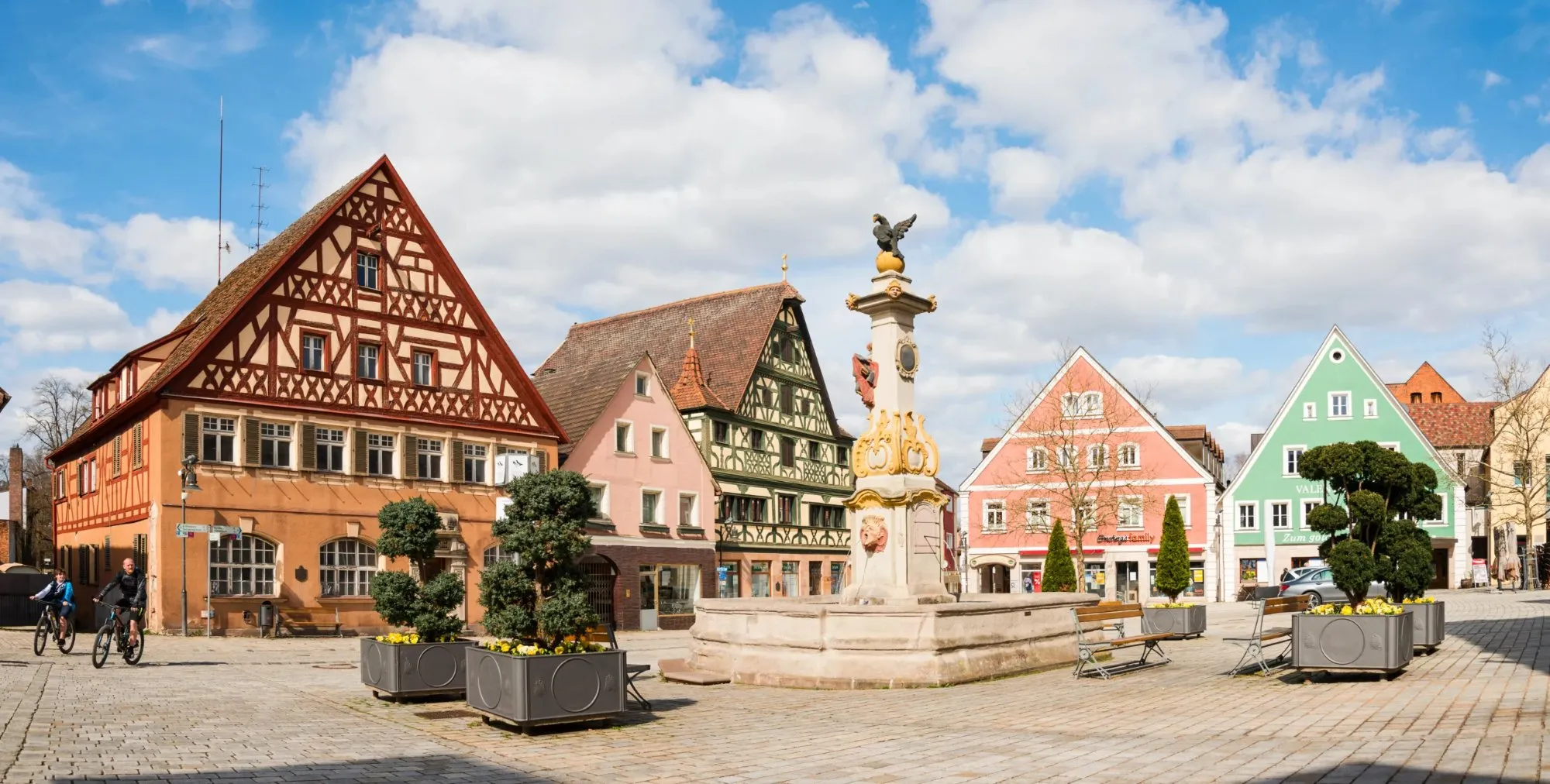
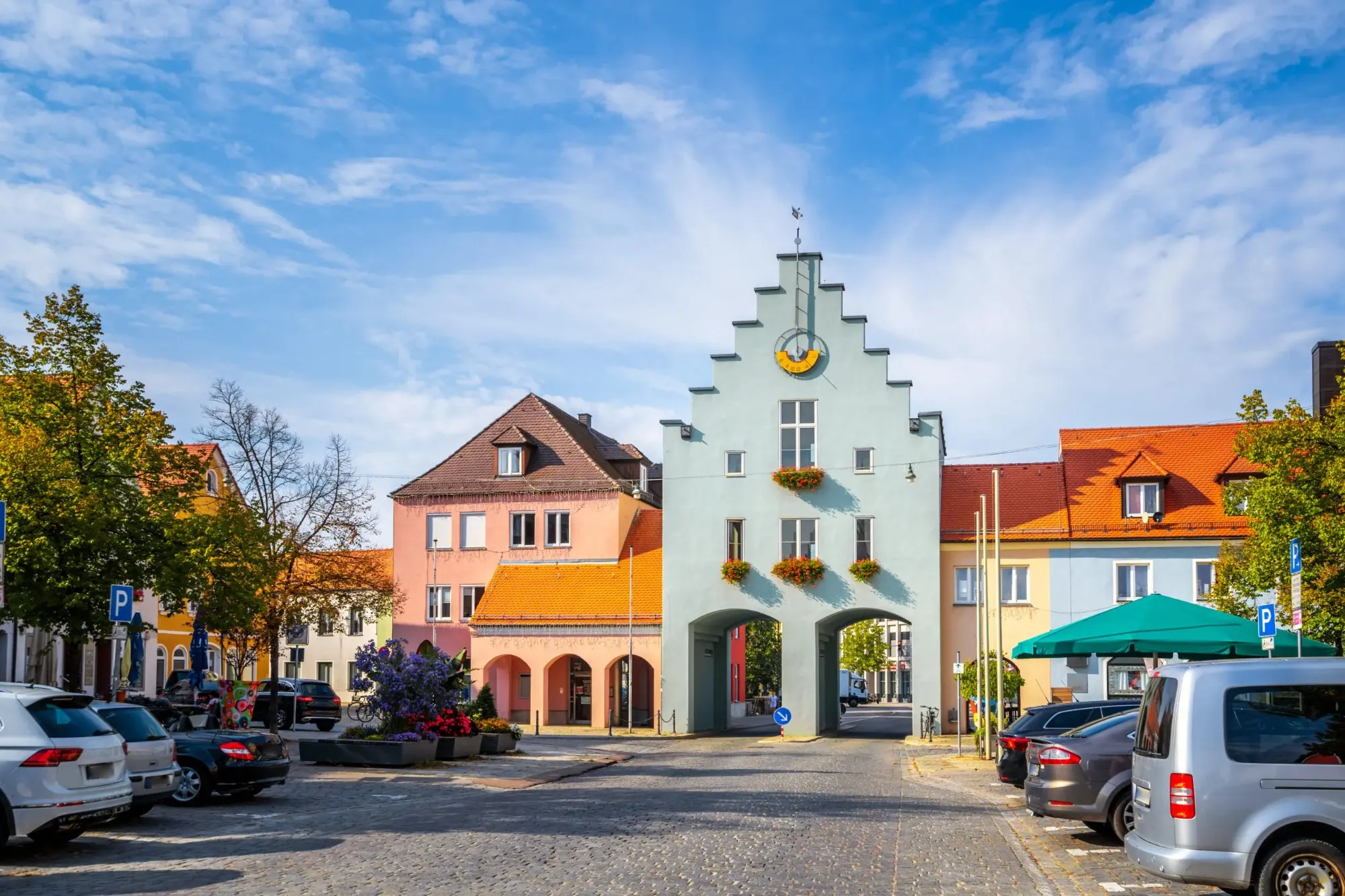





Sell your property in Nuremberg
Selective acceptance of mandates for residential and investment properties in the Nuremberg area.
Apartments
Professional valuation and sale of condominiums at the best price.
Details of the apartment sales strategyHouses
Market single-family and terraced houses with maximum reach.
Details of the house sales strategyMulti-family
Discreet and market-appropriate brokerage of investment properties.
Details of the multi-family sales strategyThe Davis 6-Step Strategy: Mathematical Precision Instead of Random Marketing.
How our boutique law firm systematically safeguards the value of premium residential and investment properties in the Nuremberg metropolitan area and realizes them at their optimal value.
IHK Underwriting & Standard Valuation
An accurate, objective determination of the actual market value as of a specific date, in accordance with the current ImmoWertV. Depending on the type of property, we use the cost approach, income approach, or sales comparison approach—all calculated using data-driven professional industry software (Sprengnetter / LORA). In addition, particularly for investment properties, we use our network to verify the bank’s loan-to-value ratio. This mathematically and precisely eliminates subjective price expectations from the outset and provides a strong indicator for subsequent marketing and the target audience, which we always identify and define in advance without exception. In special cases, the valuation is additionally supported by a court-admissible appraisal report prepared by our certified appraiser, Joachim Weiß.
The Bank-Grade Document Engineering & Network Audit
Comprehensive and error-free preparation of property files. We review and, if necessary, prepare legally compliant living space calculations by an engineer or architect in strict accordance with the Living Space Ordinance (WoFlV); we request historical construction files from the Nuremberg City Planning Office; and we organize WEG minutes, financial statements, and declarations of division, including all addenda. In cases of inheritance, we obtain documents such as wills or certificates of inheritance in advance and coordinate with authorities or executors. Exclusive added value from our firm: At the client’s request, we directly incorporate Stephan Lüneburg in the Davis & Partner Network of Experts into the mandate for tax optimization (e.g., avoidance of capital gains tax) and, for complex special issues in real estate law, the law firm of specialist attorney Felix Beer directly into the mandate to seamlessly prevent any subsequent negotiations.
Database-Driven Exclusive Pre-Marketing
No passive waiting. Before a property is officially listed on the market, we use our dynamic database system. We not only match the property with institutional investors but also filter active search profiles from all daily client inquiries. Through this targeted, discreet preliminary matching process, we launch a highly efficient pre-marketing campaign with prospective buyers who are already a good fit, pre-qualified, and credit-checked.
High-End Media Architecture & Appreciation
Maximizing the value of your property. Professional real estate photographers and experienced media designers work hand in hand to refine both the visuals and content of the digital sales brochure. We accurately redraw floor plans to architectural standards and craft a refined, target-audience-specific message that transparently documents the property’s individual value drivers (e.g., the standard land value or the remaining energy efficiency lifespan) for buyer’s banks.
Professional Guided Tours
No mass tourism or real estate tourism in your private spaces. We exclusively arrange tailored, highly discreet one-on-one appointments—and only with prospective buyers whose financial viability and liquidity have been verified in advance through our bank-independent financial review.
Law Firm Audit, Notary Assistance & Handover
We break the industry’s customary silence—with us, there’s no "black box." As soon as a buyer is found, we ensure financing is in place through a professional, bank-independent review conducted by Stefan Vogelsang (Dr. Klein). We gather all necessary documentation, coordinate the notary appointment, personally accompany you to the notarization, and organize the final property handover. While we quietly manage all processes behind the scenes, you, as the owner, receive regular updates and always retain full control.
Latest insights for international owners
Practical guidance on selling property in Nuremberg and the metropolitan region.
- Article
Selling an old building in Gostenhof (Nuremberg)
"Old buildings in Gostenhof sell themselves." This sentence persists. In practice, it will only be true in 2025 under one condition: If the ...
- Article
Lightning protection Nuremberg - Safety for buildings, systems and people
Electrical systems and modern building technology are now an integral part of residential, commercial and industrial buildings. Request advice today.
- Article
Real estate sales checklist: What you should prepare
Many owners start their real estate sales with the thought: "We'll just take a few photos, put the ad online and then it'll be fine."
- Article
Checklist for real estate sales
At first glance, selling real estate seems straightforward: set a price, create an ad, conduct viewings - done. In reality, it's a matter...
- Article
The big difference between the desired price and the achievable sales price
"We would like to have at least X amount - we don't want to sell for less than that."
What our clients say
Genuine reviews from owners and buyers.

Familie Becker
Hauskauf · Nürnberg
„Ein Hauskauf ist Vertrauenssache – und bei Herrn Davis hatten wir vom ersten Gespräch an das Gefühl, in den richtigen Händen zu sein. Er hat uns durch jeden Schritt begleitet, klar und ohne Umwege."

M. Karaca
Hauskauf · Nürnberg
„Als Käufer war mir Verlässlichkeit das Wichtigste. Herr Davis war durchgehend transparent, pünktlich und hat mir das Gefühl gegeben, dass jede Entscheidung auf Fakten basiert – nicht auf Druck."

C. von Asten
Wohnungsverkauf · Erlangen
„Herr Davis hat sich um alles gekümmert – von der Bewertung bis zur notariellen Beurkundung. Professionell, strukturiert und immer erreichbar. Ich würde jederzeit wieder mit ihm zusammenarbeiten."
F. von Saldern
Hausverkauf · Schwabach
Herr Davis hat mein Elternhaus bewertet und erfolgreich verkauft. Seine Beratung war fundiert, sein Auftreten sehr seriös.
D. Schneider
Hausverkauf · Roth
Ein fairer Vermittler, der Käufer und Verkäufer gleichermaßen ernst nimmt. Alles verlief transparent und reibungslos.
K. Roth
Wohnungsverkauf · Nürnberg
Der Verkauf meiner Eigentumswohnung war emotional – Herr Davis hat mich mit Feingefühl und Kompetenz begleitet.
B. Breidenstein
Hauskauf · Erlangen
Herr Davis war transparent, gut vorbereitet und hat mir alle Unterlagen verständlich erklärt. Sofort Vertrauen.
M. Lindenthal
Immobilienverkauf · Roth
Sachlichkeit und echte persönliche Betreuung – beides zusammen. Alles verlief professionell und ohne Überraschungen.
J. Vogel
Hauskauf · Schwabach
Stets sachlich und hilfsbereit. Ich hatte zu jeder Zeit das Gefühl, in guten Händen zu sein.
B. Lehmann
Wohnungsverkauf · Nürnberg
Der perfekte Ansprechpartner: kompetent, empathisch und sehr strukturiert. Klare Empfehlung.
H. Nakamura
Hauskauf · Neumarkt
Vom Erstkontakt bis zur Schlüsselübergabe hervorragend begleitet. Mehr kann man nicht erwarten.
Familie Dubois
Hausverkauf · Fürth
Herr Davis hat unsere Immobilie zum bestmöglichen Preis verkauft. Klar, strukturiert und immer auf unserer Seite.
Names and photos partially adjusted for discretion.

Christoffer Davis
„Structure in the background. Responsibility in the foreground."

Talk to us
We look forward to hearing from you and will be happy to advise you personally.
Write WhatsAppI look forward to your inquiry.
Send message
We will get back to you within 24 hours.
Property Sales in Nuremberg & the Metropolitan Region: Strategy Beats Chance
Selling a property in Nuremberg is a decision of enormous financial significance. In a market environment characterized by high dynamics and complex pricing structures, it is not viewings alone that determine success – it is a precise sales strategy combined with a well-founded property valuation that makes the difference.
As specialized real estate experts, Davis & Partner guide discerning property owners through the sale of houses, condominiums, and investment properties across the entire metropolitan region. Our focus lies on the core areas of Nuremberg and Fürth as well as the important growth markets of Erlangen, Schwabach, and Roth. Every micro-location has its own DNA. Anyone who wants to unlock the full potential of their property here needs more than just a simple listing – they need genuine market leadership in analysis.
Precision over Price Dumping: Why the Valuation Makes All the Difference
A critical mistake in the Nuremberg market is incorrect positioning from the outset. A price that is too high often leads to long listing times, while a price that is too low simply gives away capital. A well-founded property valuation in Nuremberg by Davis & Partner is therefore not a rough estimate, but the result of an in-depth market analysis. The goal is to identify the point at which maximum demand meets the highest possible market price.
The Davis & Partner Quality Standards: Structure for Your Success
Our approach follows a clear commitment to quality and results. For property owners looking to sell their apartment or house in Nuremberg, this means specifically:
- Absolute transparency. You receive clear insights into every step through to the final notarization.
- Targeted buyer outreach. Only vetted and financially qualified prospects are considered.
- Confident negotiation. The sales process is actively managed, with the goal of achieving a financially compelling outcome.
Regional Expertise in Fürth, Erlangen, and the Surrounding Area
The rules of the game within the metropolitan region differ significantly. While in Nuremberg high demand often meets a limited supply, other locations require a differentiated approach. This is precisely where the difference between a simple brokerage and a structured sales strategy becomes evident.
If you wish to sell your property in Nuremberg or the metropolitan region, a non-binding assessment will give you a clear orientation on the current market value and the next sensible steps.
In-Depth Guides
- Real Estate Appraisal in Nuremberg: Methods & Market Analysis 2026
- Selling a House in Nuremberg, Fürth, and Erlangen: Market Analysis 2026
- Luxury Real Estate in Nuremberg: Marketing & Property Listing Strategy
- Selling a Hoarder's Apartment in Nuremberg: Help & Best Price
- Hoarder's Apartment & Renovation Backlog: Selling at the Best Price
- Selling a Property in Need of Renovation: The Best-Price Strategy
Learn more about our exclusive partnership for Painting & Facade.